
A dishwasher that does not drain properly is a frustrating problem because it often leaves standing water at the bottom of the tub, can create unpleasant odors, and usually means the cleaning cycle did not finish the way it should. In many cases, the cause is not a major internal failure. Official troubleshooting guidance from manufacturers points first to common issues such as clogged filters, blocked or kinked drain hoses, a clogged sink drain or garbage disposal, a blocked air gap, installation mistakes, or excessive suds from the wrong detergent or too much detergent.
Start with the simplest checks first
Before assuming your dishwasher needs professional repair, it makes sense to rule out the basic causes. GE advises checking the filters, looking for large objects blocking the sump area, inspecting the drain hose for kinks or blockages, confirming the kitchen sink drain is clear, and cleaning the air gap if one is installed. Samsung also specifically says to check the sink drain for clogs and make sure the drain hose connection is straight and not pinched, bent, or damaged.
Common reason 1: The dishwasher filter is clogged
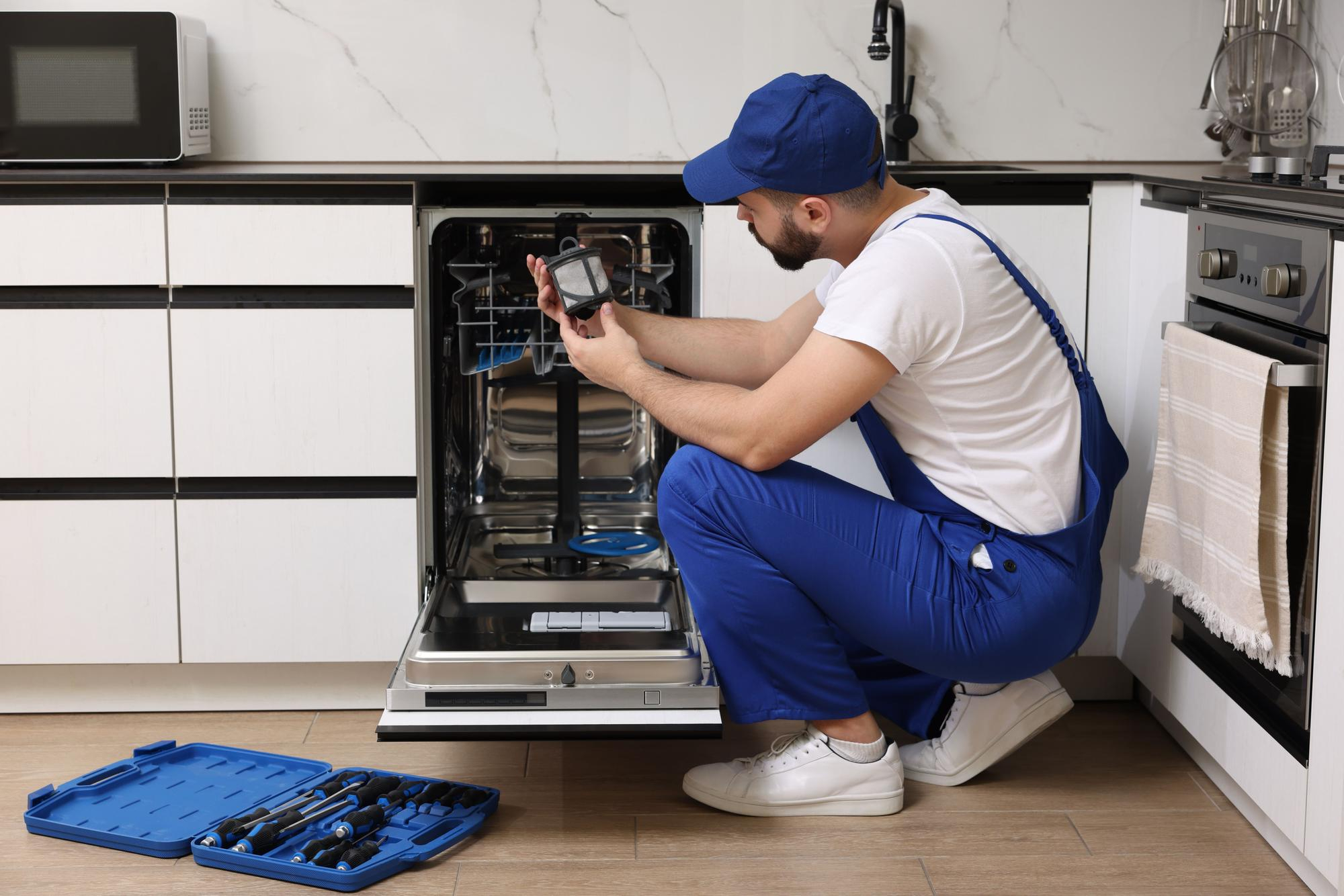
A blocked filter is one of the most common reasons a dishwasher will not drain. GE says to remove and check the fine and ultra-fine filters on applicable models, while Cove lists blocked filters among the main causes of drainage problems. Maytag also explains that excessive standing water after a completed cycle is commonly linked to a clog in the drain system.
What to do first:
- Remove the bottom rack for easier access.
- Check the filter area for food particles and debris.
- Clean the filter according to your dishwasher model’s instructions.
- Remove any large pieces of food from the bottom of the tub.
Common reason 2: Something is blocking the sump or pump area
Drainage can also fail when food debris or foreign objects block the sump or pump area. GE advises checking for paper or large objects covering the sump area in the rear of the tub. Bosch and Siemens guidance also notes that food, dirt, or even small pieces of glass can clog the filter or pump and prevent the dishwasher from draining correctly.
What to do first:
- Look for visible debris in the bottom of the dishwasher.
- Remove large food scraps carefully.
- If your model allows access to the filter and nearby area, inspect it for obvious obstruction.
Common reason 3: The drain hose is kinked, clogged, or installed incorrectly
The drain hose is a very common source of dishwasher drainage problems. Samsung says the hose connection to the sink should be straight and not pinched, kinked, bent, or damaged. GE also says to check the hose where it connects below the sink for a blockage or a kink. Whirlpool adds that an improperly installed hose during a remodel or self-install can cause drainage failure, and that old hoses may collect buildup that restricts flow.
What to do first:
- Inspect the hose under the sink for bends or pinching.
- Check whether the hose connection looks loose or obstructed.
- If the dishwasher was recently installed or plumbing was changed, review whether the hose was connected correctly.
Common reason 4: The garbage disposal or sink drain is clogged
If your dishwasher drains through the kitchen sink plumbing or a garbage disposal, a blockage there can stop water from leaving the dishwasher. GE says to make sure the kitchen sink drain is not clogged and recommends running the disposer to help clear the drain system. Cove also lists a blocked garbage disposal as one of the common causes of a dishwasher that does not drain.
What to do first:
- Check whether the kitchen sink is draining normally.
- If a garbage disposal is connected, make sure it is not blocked.
- Run the disposal if appropriate for your setup, but do not put your hands into it.
Common reason 5: The air gap is blocked
Some dishwasher installations use an air gap to prevent backflow and support proper drainage. Samsung notes that depending on local regulations, the drain hose may connect through an air gap or use a high loop. GE says that if an air gap is installed and becomes filled with debris, cleaning it can help water flow better during drainage. Whirlpool also notes that a clogged air gap can cause drainage problems.
What to do first:
- If your sink has an air gap, remove the cap and check for buildup.
- Clean out visible debris carefully.
- Make sure the air gap is properly secured after cleaning.
Common reason 6: The dishwasher installation setup is wrong
Improper installation can prevent the dishwasher from draining even if there is no clog inside the machine. GE says that when no air gap is used, the drain hose must have a proper high drain loop installed at the correct height. Samsung similarly explains that the setup must prevent backflow and allow proper drainage. Cove also lists incorrect installation as a cause of standing water and poor draining.
What to do first:
- Check whether the hose has a proper high loop if your setup requires one.
- Review whether the dishwasher was recently installed or reconnected.
- If the problem began after plumbing work or a remodel, installation should be one of the first things to review.
Common reason 7: Too much detergent or the wrong detergent caused oversudsing
Drain problems are not always caused by a clog. GE says that using the wrong type of detergent or too much detergent can create oversudsing that interferes with proper draining. This is easy to overlook because the dishwasher may appear to be running, but the cycle does not finish normally.
What to do first:
- Make sure you are using detergent intended for dishwashers.
- Follow the recommended detergent amount for the load and your model.
- If you suspect oversudsing, stop using extra detergent and review the manufacturer guidance for your machine.
Common reason 8: The cycle was interrupted before draining finished
Sometimes standing water appears because the cycle never reached the drain phase. Maytag explains that if a dishwasher cycle is interrupted before draining is completed, some standing water may remain. It also notes that running another uninterrupted cycle may resolve the issue if the problem was simply an interrupted wash.
What to do first:
- Check whether the cycle was accidentally canceled or opened mid-cycle.
- Run another full cycle without interruption.
- If the dishwasher still leaves excessive water behind, continue troubleshooting.
Is any standing water normal?
A small amount of water is not always a sign of failure. GE says that on some models, water in the sump or filter area is normal, while water covering the bottom of the tub is not. Cove gives similar guidance, noting that water underneath the filters in the sump area can be considered normal. Maytag also says that a small amount of standing water may remain in some dishwashers, but excessive standing water after a full cycle usually points to a clog or blockage.
What you can safely check yourself
For most homeowners, the safest first checks are simple: inspect and clean the filters, remove visible debris from the bottom of the dishwasher, check the hose for obvious kinks, confirm the sink drain and garbage disposal are clear, inspect the air gap if one is installed, and make sure the cycle was allowed to finish. These are the same first-line troubleshooting steps repeatedly recommended by manufacturers.
When it is time to call for professional dishwasher repair
If the dishwasher still does not drain after the basic checks, the problem may involve a blocked pump, an internal drain issue, a pressure sensor problem, or another component that needs professional diagnosis. Cove states directly that if the basic troubleshooting steps do not resolve the problem, service is necessary. Whirlpool also recommends scheduling service if normal troubleshooting does not fix the issue.
You should consider professional service if:
- water repeatedly covers the bottom of the tub after a full cycle,
- the dishwasher keeps failing to drain even after filter cleaning,
- the hose and sink connection appear normal but water still remains,
- or the issue started after installation changes and does not improve after correction. These are reasonable service triggers based on manufacturer troubleshooting guidance.
If your dishwasher is not draining, the most likely causes are usually practical ones: a clogged filter, debris in the sump or pump area, a kinked or blocked drain hose, a clogged sink drain or garbage disposal, a blocked air gap, installation problems, or excess suds. These are the same causes that appear consistently across official support content from Samsung, GE, Whirlpool, Maytag, and Cove.
Starting with the simplest checks can often save time and help you understand whether the issue is minor or whether your dishwasher needs repair. If the problem keeps coming back or the water will not clear after a full cycle, a professional diagnosis is the safest next step.