A refrigerator that is not cooling properly is more than an inconvenience. It can spoil food, disrupt your routine, and leave you wondering whether the problem is simple or serious. In many cases, poor cooling is caused by common issues such as incorrect temperature settings, blocked air vents, dirty condenser coils, poor door sealing, overloading, recent installation, frequent door opening, or power-related problems. Manufacturers like Whirlpool, GE, and Samsung all list these as common reasons a refrigerator may stop maintaining the right temperature.
Start with the simplest checks first
Before assuming your refrigerator needs a major repair, it is worth checking a few basic things. GE recommends verifying the temperature controls, food load, door closure, door gasket condition, and whether the appliance has had enough time to cool after installation. Samsung also notes that many cooling concerns can be resolved by adjusting settings, checking door seals, and resetting the refrigerator if needed.
If your refrigerator seems cool but not cold enough, or if some sections feel warmer than others, there may be an airflow or usage issue rather than a failed part. Starting with these simple checks can save time and may restore proper cooling without any repair visit.
Common reason 1: The temperature settings are wrong
Sometimes the issue is as simple as the control settings being changed accidentally. Whirlpool, GE, and Samsung all advise checking the temperature settings first when a refrigerator is not cooling as expected. If the controls are set too warm, the appliance may run but still fail to keep food at a safe temperature.
What to do first:
- Check the refrigerator and freezer temperature settings.
- Make sure the controls were not changed during cleaning or while moving food.
- Give the refrigerator time to stabilize after adjusting the settings.
Common reason 2: Air vents are blocked
Refrigerators rely on internal airflow to keep temperatures even. Whirlpool and Samsung both warn that blocked air vents can interfere with cooling and create warm spots inside the appliance. If food containers are pushed tightly against the vents, cold air may not circulate the way it should.
What to do first:
- Look for vents inside the refrigerator and freezer compartments.
- Move food away from the air openings.
- Avoid overpacking shelves so air can circulate freely.
Common reason 3: Dirty condenser coils
Dirty condenser coils are one of the most common causes of weak cooling. Whirlpool explains that condenser coils help release heat, and if they become covered with dust, grease, or pet hair, the refrigerator may struggle to cool efficiently. Whirlpool specifically recommends more frequent cleaning in dusty homes or homes with pets.
What to do first:
- Check whether the condenser coils are dusty or visibly dirty.
- Review your model’s manual for coil location and cleaning guidance.
- If cleaning is recommended for your model, do it carefully and safely.
Common reason 4: The door is not sealing properly
If the refrigerator door does not close fully, or if the door gasket is dirty or damaged, cold air can escape and warm air can enter. GE says to check door closure and gasket condition, while Samsung also recommends inspecting and cleaning the door seals when cooling performance drops.
What to do first:
- Make sure nothing inside is preventing the door from closing.
- Inspect the gasket for dirt, food residue, or visible damage.
- Clean the gasket gently and make sure it seals evenly around the door.
Common reason 5: The refrigerator is overloaded
A refrigerator packed too tightly can restrict airflow and reduce cooling efficiency. GE advises checking the food load in both the refrigerator and freezer sections, and Whirlpool notes that adding a large amount of food can temporarily affect cooling performance.
What to do first:
- Avoid blocking vents with containers or bags.
- Rearrange food so air can move between items.
- If you recently loaded many groceries at once, allow time for temperatures to recover.
Common reason 6: The refrigerator was recently installed or restarted
A newly installed refrigerator often needs time to cool down fully. GE specifically says to check how much time has passed since installation, and Whirlpool also notes that a recently installed unit may not yet be at normal operating temperature.
This can also happen after a power outage, a reset, or if the refrigerator was accidentally turned off and then turned back on. Whirlpool’s product help pages note that some models may need to be manually turned back on after a power outage or surge.
What to do first:
- Confirm the refrigerator is turned on.
- Allow enough time after installation or restart for proper cooling.
- Check the owner’s manual for model-specific startup behavior.
Common reason 7: Frequent door opening or warm room conditions
If the refrigerator door is opened often, especially in a warm kitchen, cooling performance can drop temporarily. Whirlpool notes that frequent door opening and surrounding conditions can affect cooling, and Samsung also warns against placing the refrigerator near direct heat or in unsuitable conditions.
What to do first:
- Reduce unnecessary door opening.
- Do not leave the door open while organizing groceries.
- Make sure the appliance is not placed too close to strong heat sources or in direct sunlight.
Common reason 8: The refrigerator is not getting proper power
If the refrigerator is not running correctly, power issues may be part of the problem. GE recommends checking the outlet, breaker, and general power status when the refrigerator does not run or cool. Samsung also lists improper plugging and power-related issues among common reasons a refrigerator may not cool.
What to do first:
- Verify the refrigerator is plugged into a working outlet.
- Check the breaker or fuse box.
- Confirm the unit is turned on and operating.
What you can safely check yourself
For most homeowners, the safest first steps are simple and practical:
- verify the temperature controls,
- clear blocked air vents,
- make sure the doors close properly,
- inspect and clean the gaskets,
- reduce overloading,
- check for recent installation or power loss,
- and look at the condenser coils if your model allows safe inspection. These are all common first-line checks recommended by major manufacturers.
When it is time to call for professional refrigerator repair
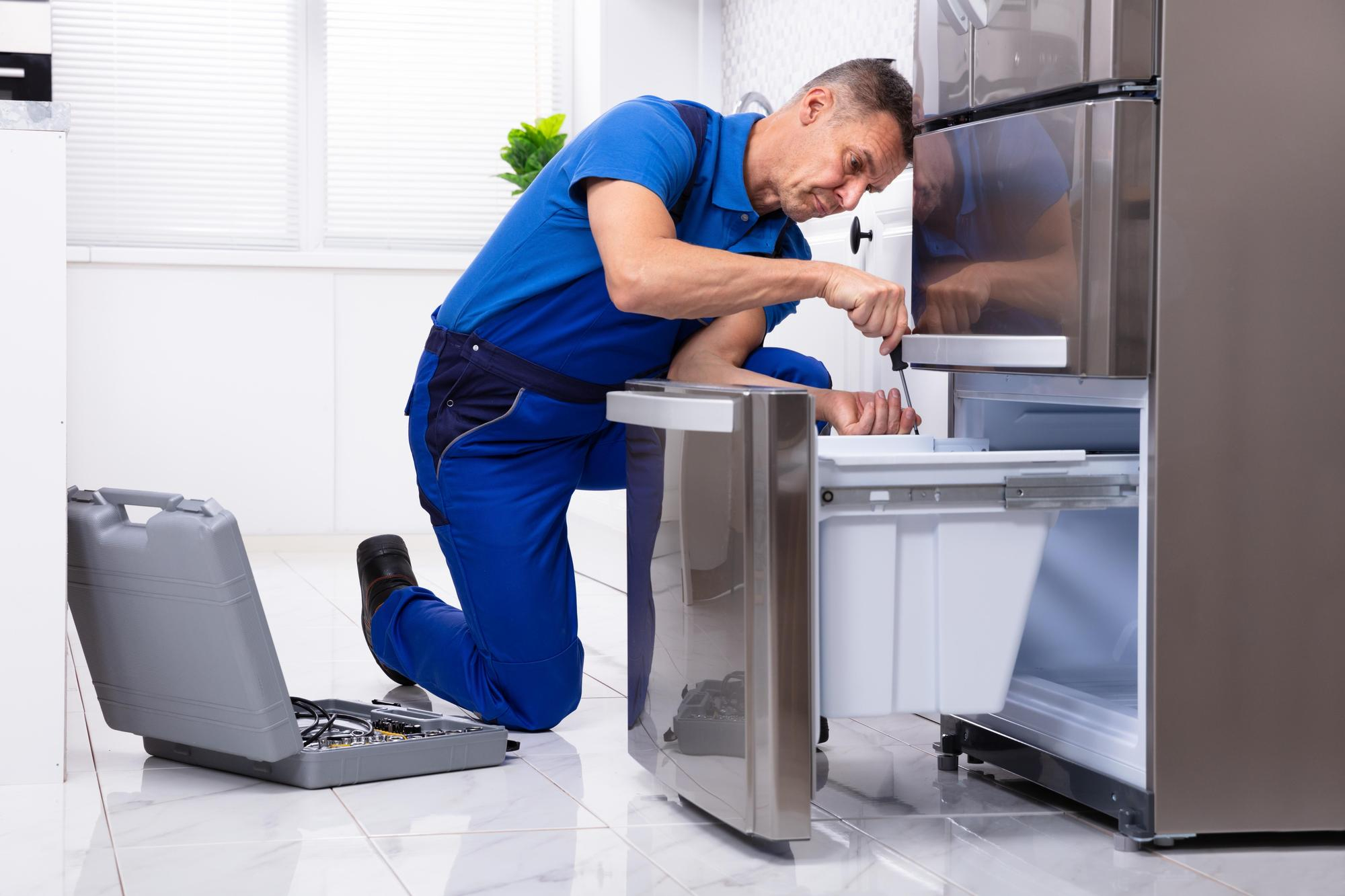
If the refrigerator still is not cooling properly after the basic checks, the issue may involve a failed internal component, airflow system problem, control issue, or another fault that requires diagnosis. Whirlpool and Samsung both indicate that if standard troubleshooting does not restore cooling, service may be needed.
You should consider professional repair if:
- the refrigerator stays warm even after settings are corrected,
- the compressor seems to run but temperatures do not improve,
- cooling problems keep returning,
- the unit has power but does not cool properly,
- or the appliance shows other unusual behavior such as inconsistent temperatures or persistent warm zones. This is an inference based on manufacturer troubleshooting guidance that points to service when routine checks fail.
If your refrigerator is not cooling properly, there is a good chance the cause is something common such as incorrect settings, blocked vents, dirty coils, poor door sealing, overloading, recent installation, or a simple power issue. These are exactly the kinds of problems highlighted across Whirlpool, GE, and Samsung support guidance.
Starting with the simple checks can help you solve the issue faster and understand whether the problem is minor or whether your refrigerator needs professional attention. If the temperature still does not return to normal after these steps, a repair visit is the smart next move to help prevent food spoilage and larger appliance problems.